

Arc of a Scythe Book Review: Read This Before Rising Thunder

Rating: ★★★★★

"The Arc of a Scythe Trilogy" Book Review:
Scythe, Thunderhead, and The Toll. Three books set in a future where humanity has conquered death. Disease is gone. Aging is reversible. Suffering is optional. And the only way to die is to be "gleaned" — killed by a Scythe, one of a carefully selected group tasked with keeping the population under control. It's utopia with a blade hidden in it, and Neal Shusterman has the nerve to ask: what does mortality mean when it's a choice?
Timing matters on this one. Rising Thunder, the first book of Shusterman's First Blades prequel trilogy, arrives December 1, 2026. It goes back to how the Thunderhead came to power and who the thirteen founding Scythes were, which means it fills in the mythology this trilogy only gestures at. You do not strictly need Arc of a Scythe to read it, but you will get almost nothing from Rising Thunder's best moments without knowing where all of this ends up. Read these three first. As for the film, it has been stuck in development at Universal since 2016, through multiple writer teams, with no cast and no date. I would not wait on it.
Citra and Rowan are chosen as apprentice Scythes, forced into a competition where the winner joins the Scythedom and the loser is gleaned. That's a compelling enough premise for a whole series, but Shusterman keeps expanding. By book two, the story has grown to encompass global politics, AI consciousness, revolution, and the fundamental question of whether humanity deserves the paradise it's built.
The Thunderhead — the benevolent AI that runs civilization — is one of the most fascinating characters in modern fiction, and yes, I said "character." It thinks, it worries, it watches humanity with something like love and something like despair. When the Thunderhead speaks, in these interstitial chapters between the human action, the whole series shifts into something rarer and stranger than typical YA.
Shusterman has been writing for decades, and his ability to craft moral dilemmas without easy answers is unmatched in the genre. The Scythes are not villains — most of them genuinely believe in the necessity of what they do. The corruption that creeps into the system is institutional, not personal, which makes it more terrifying and more real.
Greg Tremblay narrates all three with the weight these ideas deserve. Five stars for the trilogy. Essential reading. If you think YA can't handle big philosophical questions, this will change your mind.
If You Liked The Arc of a Scythe Trilogy, Try:
The Giver by Lois Lowry — The original YA "utopia with a hidden cost" novel. Simpler, shorter, equally devastating.
Never Let Me Go by Kazuo Ishiguro — A quiet, literary take on what happens when a society decides some lives are disposable. Same questions, completely different tone.
Brave New World by Aldous Huxley — The classic dystopia where everyone is happy and that's the problem. Shusterman is working in Huxley's tradition, and he knows it.
From Luke Stoffel's Bookshelf
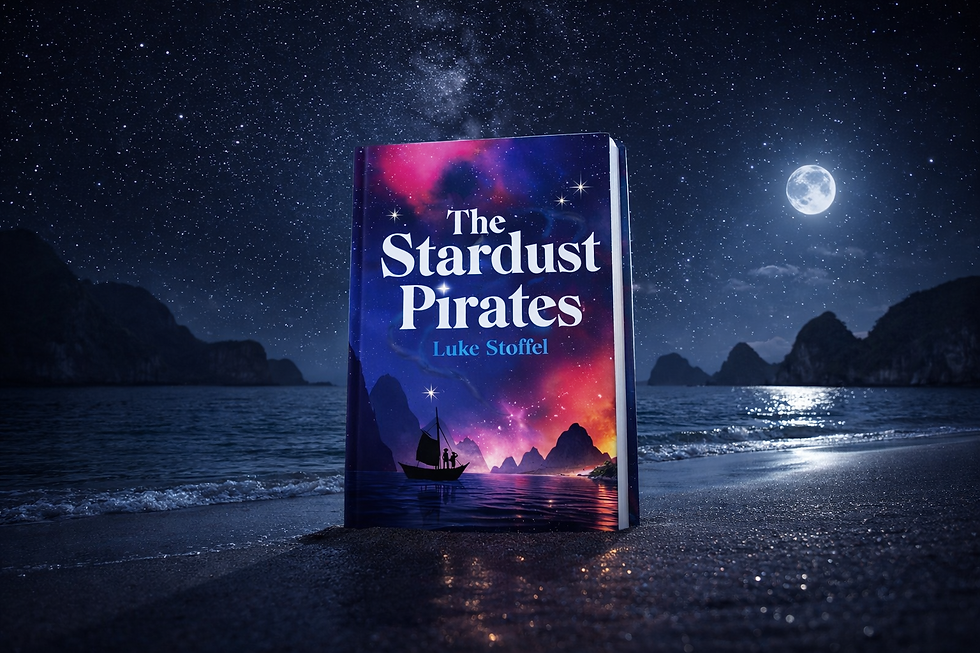
If you enjoyed this book review, check out The Stardust Pirates — a queer YA horror that shares Shusterman's willingness to ask adult questions in a YA framework, exploring what systems of power demand from young people on a Philippine island where ancient magic and moral complexity collide.
Learn More: The Stardust Pirates


Comments